
Commercial vs. Residential Dehumidification: Managing Humidity and Indoor Air Quality in Ocala Facilities
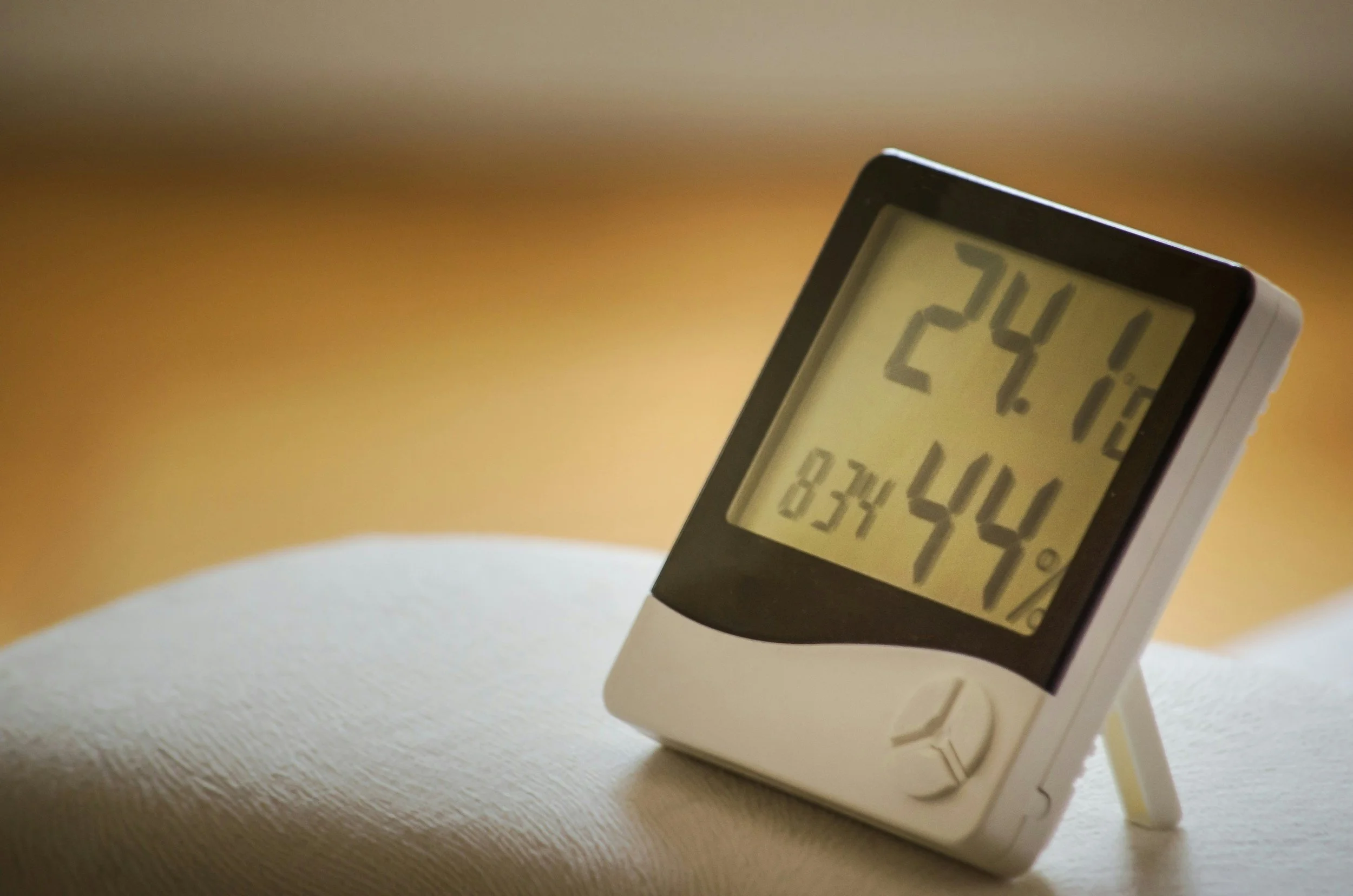
In Central Florida, keeping a commercial building comfortable involves far more than just lowering the thermostat. With relative outdoor humidity routinely exceeding 80% throughout North Central Florida, facility managers face a constant battle against moisture infiltration.
High indoor humidity doesn't just make workspace conditions uncomfortable for employees and guests—it directly threatens building infrastructure, invites mold growth, and places unnecessary mechanical strain on your primary cooling systems.
Understanding the difference between standard air conditioning moisture removal and dedicated commercial dehumidification is essential for maintaining healthy Indoor Air Quality (IAQ) and protecting your commercial property investment.
Ideal Indoor Humidity Thresholds for Central Florida Properties
For commercial facilities in cities like Ocala and Gainesville, target indoor relative humidity (RH) should strictly remain between 40% and 50%.
When indoor humidity drifts above 60%, the environment becomes vulnerable to critical facility issues:
Microbial Growth: Mold spores thrive in environments above 60% RH, posing serious health risks and potential liability.
Structural Deterioration: Excess moisture damages drywall, warps wood flooring, degrades ceiling tiles, and corrodes metal fixtures.
Air Quality Degradation: High humidity exacerbates dust mite populations and increases indoor volatile organic compound (VOC) off-gassing, impairing overall IAQ.
The Hidden Costs of Unmanaged Commercial Moisture
Relying solely on a standard commercial AC unit to control heavy Florida humidity often creates secondary problems.
Air conditioners remove moisture incidentally through condensation as warm air passes over cold evaporator coils (known as latent cooling). However, when the outdoor temperature drops slightly—such as during humid, rainy summer afternoons—the AC thermostat satisfies quickly and turns off, leaving high levels of moisture trapped inside the building.
Consequences of Improper Humidity Control:
The "Cold and Clammy" Phenomenon: Lowering the thermostat to force the AC to run longer makes spaces uncomfortably cold without adequately drying the air.
Accelerated HVAC Wear: Forcing cooling systems to over-cycle solely to handle moisture load drastically shortens compressor lifespan and increases utility costs.
Inventory & Equipment Loss: Excess humidity damages sensitive electronics, degrades stored materials, and spoils moisture-sensitive inventory in warehouse and retail environments.
Commercial Dehumidifiers vs. Standard AC Latent Cooling
To maintain optimal indoor conditions year-round, dedicated whole-building commercial dehumidification systems work alongside your primary HVAC configuration.
| Feature | Standard Commercial AC Unit | Dedicated Commercial Dehumidifier |
|---|---|---|
| Primary Function | Temperature reduction (Sensible Cooling) | Moisture extraction (Latent Cooling) |
| Operational Trigger | Thermostat temperature setpoint | Digital humidistat moisture levels |
| Cool-Weather Performance | Poor (does not run when ambient temp is low) | Excellent (operates independently of cooling demand) |
| Energy Efficiency | Low efficiency when over-cooling for moisture | Highly efficient, targeted pints-per-day moisture removal |
Customized Indoor Air Quality Solutions for Your Facility
Every commercial space—from medical clinics and corporate offices to industrial warehouses in Marion County—has unique moisture loads and ventilation requirements. Integrating targeted IAQ technologies with dedicated dehumidification ensures clean, dry, and balanced indoor air.
Recommended commercial IAQ enhancements include:
Dedicated Outdoor Air Systems (DOAS): Dehumidifies incoming fresh ventilation air before it enters your facility.
Commercial-Grade Whole-Building Dehumidifiers: High-capacity units installed inline with existing ductwork to extract hundreds of pints of water daily.
Advanced Filtration & UV Purification: Works in tandem with dehumidifiers to capture airborne particulates, bacteria, and spores.
Optimize Your Facility’s Air Quality Today
Don't let Florida's extreme humidity compromise your building's structural health, energy budget, or indoor air quality. Implementing targeted dehumidification solutions ensures year-round comfort and long-term protection for your commercial property.
Ready to eliminate indoor humidity issues in your facility? Contact our expert commercial HVAC team today to schedule an indoor air quality assessment and explore custom moisture-control options for your business.
